2023.11.18 0700
Overview
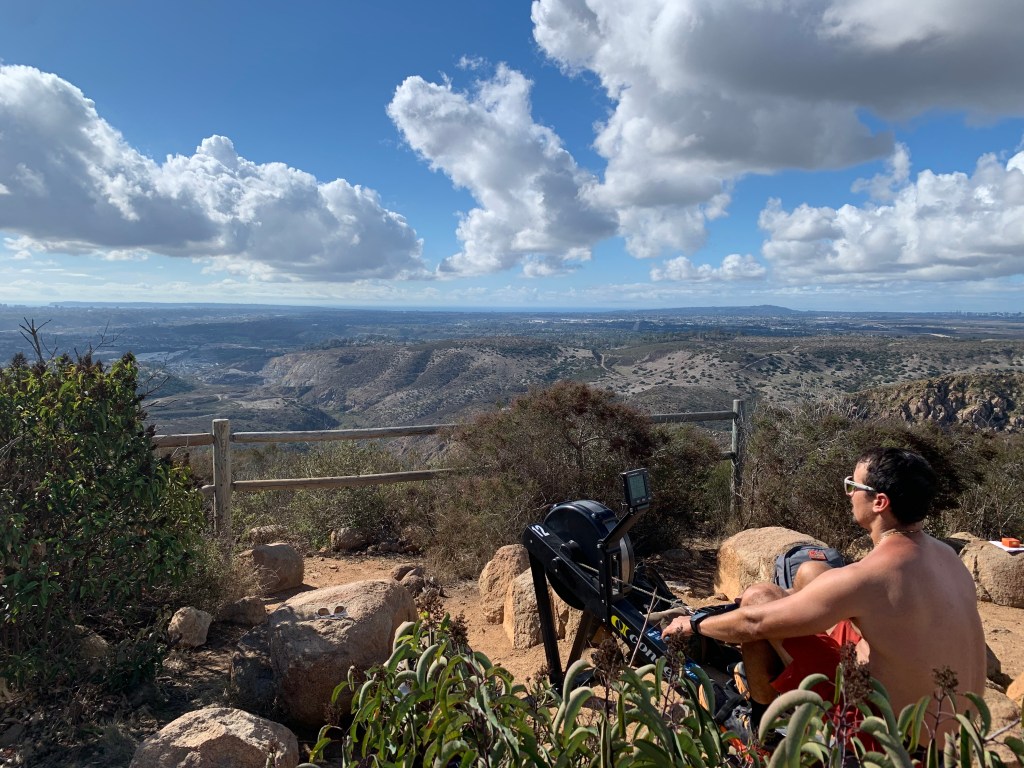
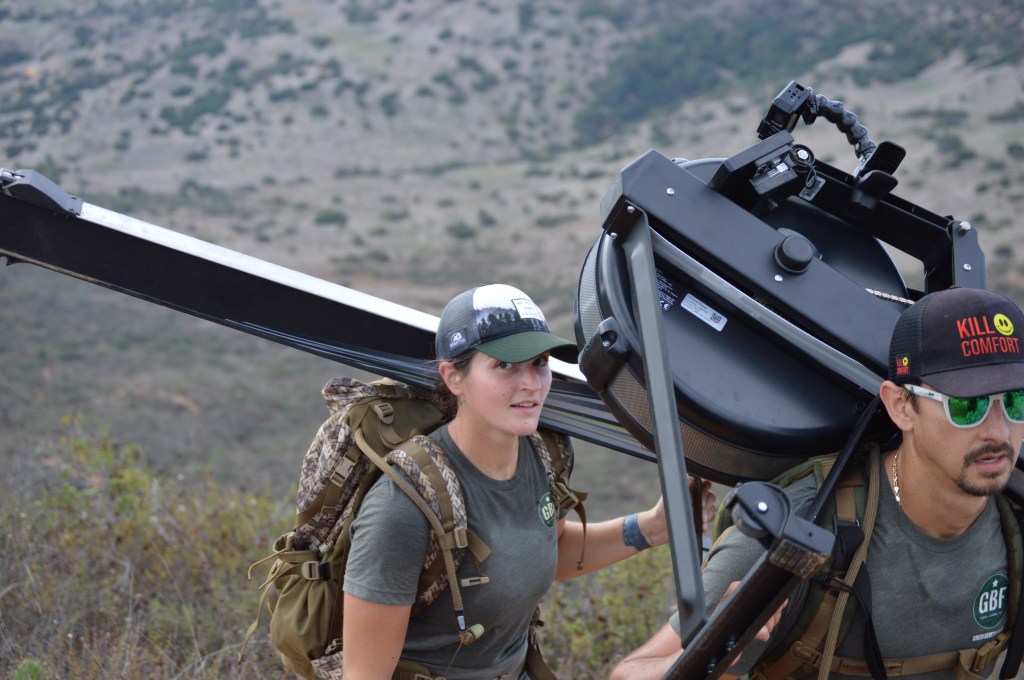
Operation DARK HORSE is a Green Beret Fitness event in partnership with Dark Horse Rowing. In pairs, you carry a Concept 2 RowERG to 3 peaks throughout 9 miles and 2200 ft of elevation gain. At each peak, you row a 10k as a team.
Brandon was my partner for DARK HORSE. We joke that we’re ruck husband and wife because we have done many events together. We know each other well and understand how to work with each other. We’ve seen each other’s highs and lows while on the mountains and under weight.
The event was sponsored by Dark Horse Rowing, Concept 2, Born Primitive Tactical, and Chart House, who filmed and shot the event.
Training and Preparation
I did nothing out of the ordinary leading up to DARK HORSE. I added some extra rowing into workouts but didn’t change my usual routine – gym, mobility, running, and some hiking.
Travel
I spent Friday night in San Diego and drove to the Start Point with a friend in the morning. The trail was only 25 minutes from the hotel. There was not much to pack for this event since there was no minimum weight requirement.
Gear
Pack: VOG Global Assault Ruk
You can see Op OCALA for more details about this pack. Honestly, the pack was only to carry water and food and to add comfort for the RowERG. Any pack with enough room for water would have been good for this event.
Outfit
- Janji Shorts
- T-shirt: Find Peace in Chaos
- Baseball cap
- Goodr Sunglasses
- Woxer 7″ Boxers
- Sports Bra
- Ininji Toe Socks + MudGear Socks
- Altra Lone Peaks
- Whoop
- Garmin Fenix 7
Packed
- Front/side/belt Ruck Pockets: small water bottles with Liquid IV, snacks, pocket knife, salt tabs, Mechanix Work Gloves, Life Straw, Salt Tabs
- Med kit, wipes, emergency shelter, compass, tape
- Small Dry Bag: extra socks, extra t-shirt, headlamp, batteries, eye drops, disposable contacts, chem light, rain jacket
- Food & Water (see nutrition below)
Nutrition
Pre-Event
I ate a salad and tacos on Friday night with my honorary local beer at Stone Brewing. I likely ate a snack and had some liquids and salts in the evening.
On Saturday morning, I ate my psychopath bagel – plain, not toasted, and dry. I drank a Body Armor (or something similar).
Event
- 3L water bladder, filled
- 2-12oz plastic water bottles with Liquid IV, filled
- Packed: 2 candy bars, 1 pack of Jelly Belly, 1 Caffeinated Clif Blok, 2 small packs of fruit snacks, 2 extra liquid IV packets
Reflection: I ate the candy bars, some jelly beans, and the fruit snacks. I could have eaten more, but felt good throughout. I drank most of my water, all of the Liquid IV, and an additional few water bottles.
Admin & Briefing
Ten teams showed up. Everyone started unloading the rowers from the Uhaul. Brandon and I observed everyone securing the seats and padding up the rowers. We had a few carabiners and straps and found a way to hold the seat in place, which ended up unnecessary. Gregg instructed everyone to line up the rowers. We did not do a great job. We moved everything around to be more aligned. After this, we had to move our rower again based on our assigned team number.

After the usual admin and the reminder to “save the rower before you save yourself,” we were surprised with a 2k row buy-in and buy-out. Only one partner was allowed to do one of each. We decided that I would row the buy-in.
It’s hard to judge a book by the cover, but if you looked at the field, there was a mix of skill sets, strengths, capabilities, and competitiveness. But everyone looked fit and capable. It wasn’t going to be an easy race.
Goals & Strategy
Our goal was to not be time-capped before the 3rd peak and aim to finish in the pass time (8 hours). I know this feels like aiming low, but we didn’t know what to expect. I texted Brandon two days before,
“How you feeling? Somehow I still haven’t picked up a rower. 👀”
I am at a gym at least four days a week with multiple rowers I could have practiced with. I think I was embarrassed, maybe? It was a weird feeling.
Anyways. We both knew that we weren’t the strongest rowers. If we were going to make up time, it had to be on the hikes.
Our row strategy was to start with 5 minutes on / 5 minutes off. This wasn’t the fastest way to complete a 10k, but it gave us adequate rest. If someone was moving slower at times, we weren’t obligated to row a specific distance. Work hard in your work time and rest in your rest time. We also planned to remain flexible. We aimed to complete each row in 45-50 minutes.
Easy math – if we spent ~2 hours for each peak, we could come In under the Dog Tag time (6h30m). The addition of the 2k rows and 0.5 miles would make this tight.
The Event
2k Buy-in: Remain Calm
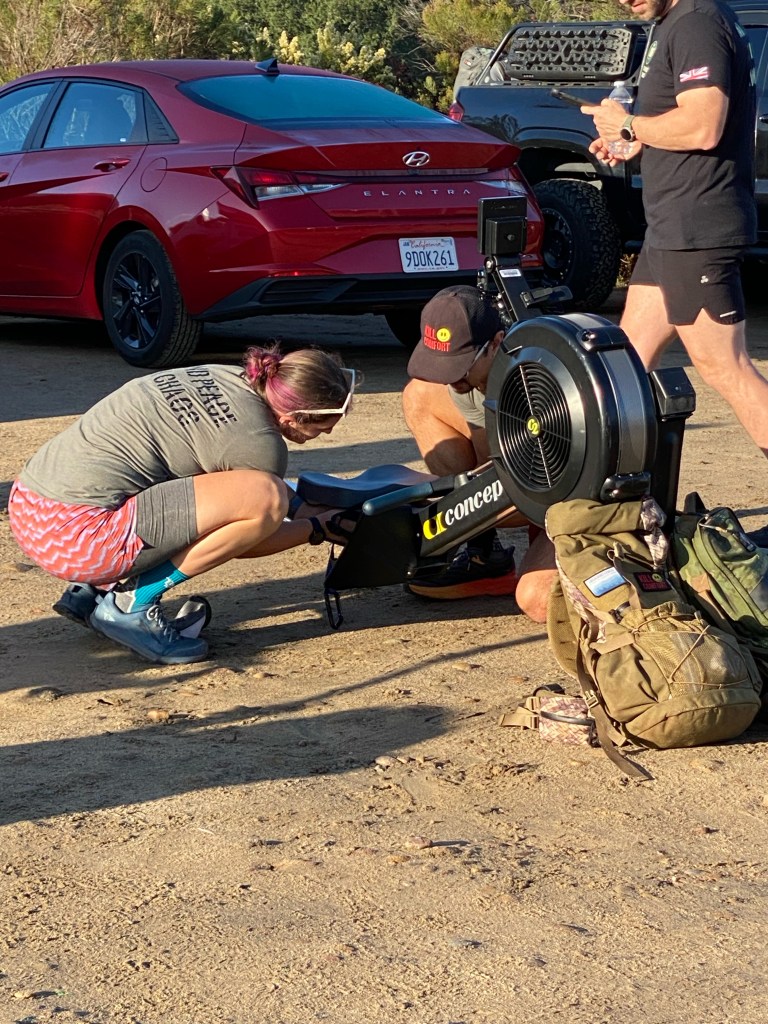
If I go hard, I can row a 2k in 8 minutes. This was not the time for that. But my adrenaline was pumping and this was a race. I kept my cool and held a slower stroke rate. Michael was next to me and had good rowing technique. I kept my stroke around 24 with a damper around 5. I finished at 8:13 (I think 3rd behind Michael and Dylan). Brandon and I fumbled with the straps resulting in an absolute waste of time since we split the rower into two parts. Dumb mistake.
We probably were now 6th off the line because of this. Brandon started with the flywheel while I carried the seat. Note that the event kicked off ~0.5 miles from the original start point because of parking – bonus meters and miles!
SP to Peak 1: Figuring it Out
We didn’t go out hard. We both generally have a fast rucking pace, so we moved quickly but were not jogging or running. There was some rocky terrain once we got onto the trail, but Brandon is strong on trails so he moved well with the heavier piece of the rower. I realized the seat was just awkward to carry. I started with the seat behind me then moved it to the front, after it hit me in the head a few times, and mostly shoulder carried it (with some weight resting on my pack).
The climb was steady to start and then picked up. Brandon was powering through with the flywheel even though I kept asking if he needed to switch. Honestly, I was a little nervous about carrying it. I couldn’t tell you why.

Sure, it was a little clunky, but it wasn’t any heavier than what I’m used to carrying. Maybe it was more of an “excited nervous”. We saw some other teams up in the distance as we continued up. Eventually, he gave in and we switched the flywheel to my back. I think we may have switched back for the last leg to the peak. We trailed in right behind Team 9, who we had caught up to while one partner was cramping. We were the 6th and 7th pairs on the peak.
Peak 1: Electric
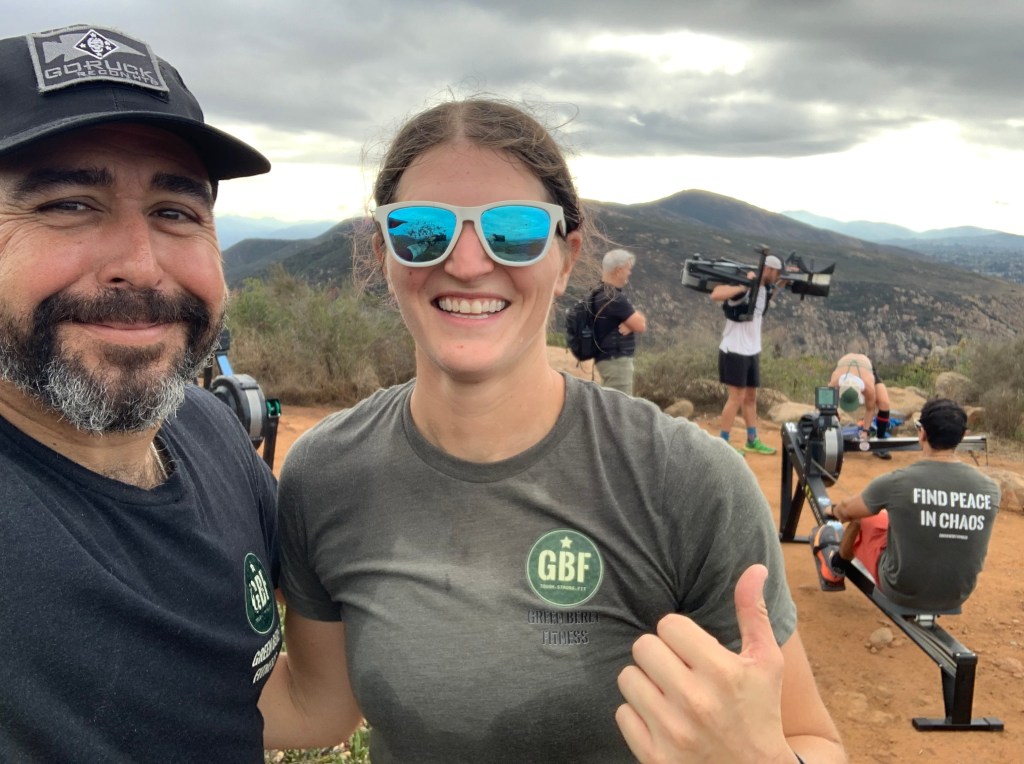
Electric. That’s how I would describe the energy as we summited the first peak. We said hi to Jorus. Found a spot that looked “flat” and set up our rower. I couldn’t help but smile. I think I started on the row. Honestly, I really couldn’t believe how amazing this
experience was. I was smiling, talking to whoever would listen, snapping a few pictures, and just taking in the moment. I kept thinking about how there was nowhere else I would rather be in that moment. It was almost overwhelming.
Sure, my body was feeling a little tired, but it didn’t matter. Mission Trails is a popular area to hike on the weekends – many people stopped and asked what we were doing. It was exciting to talk about the mission and to show it in real time. Everyone on the peak had just hiked up there, so the question was, “Wait, did you carry those up here?” There was an enormous sense of community, surrounded by like-minded people, and being able to share it with others.
Teams that arrived at Peak 1 around the same time as we did left the peak faster with quicker row times. We finished our row in ~44 minutes, packed quickly, and headed off.
Peak 1 to Peak 2: We’re Moving
We knew that this was a short and quick climb. I think we shared the load between the flywheel. We arrived at the peak right around the same time as Teams 7 and 9 and right as the two teams of brothers were finishing up their rows and leaving.
Peak 2: Happiness
It’s another 10k row. Pretty straightforward. We kept with the same plan of 5 min on/off. We had adequate time to eat and drink. Again, there were a lot of people hiking through this peak. We met a TikTok-er who interviewed me while I was rowing. He asked some general questions and then asked two more. “How do you define happiness?” and “If you could tell everyone one thing right now, what would it be?”. I don’t remember my exact answers, but the first was pointing out, “This is.” To the second, it was along the lines of putting yourself out there and trying things that challenge you. Oh, and to follow Green Beret Fitness! I sent him to Clint to do another interview. We’re still waiting to see it, but can’t wait!
We finished the row in ~46 minutes. We were probably 5 minutes behind the two teams we came into Peak 2 with.
Peak 2 to Peak 3: The Overtake
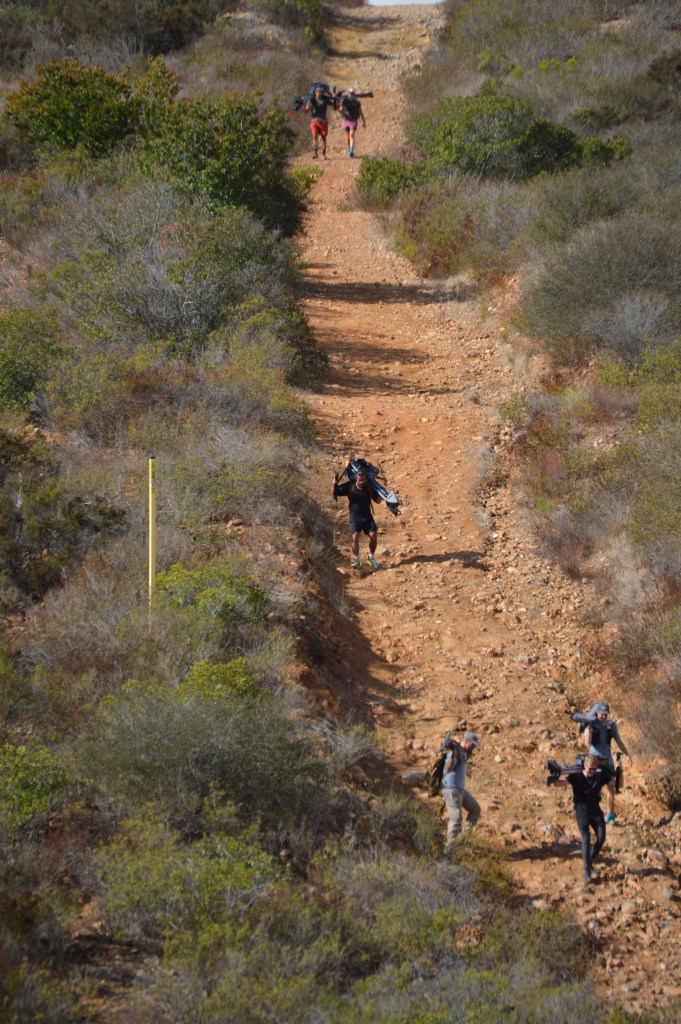
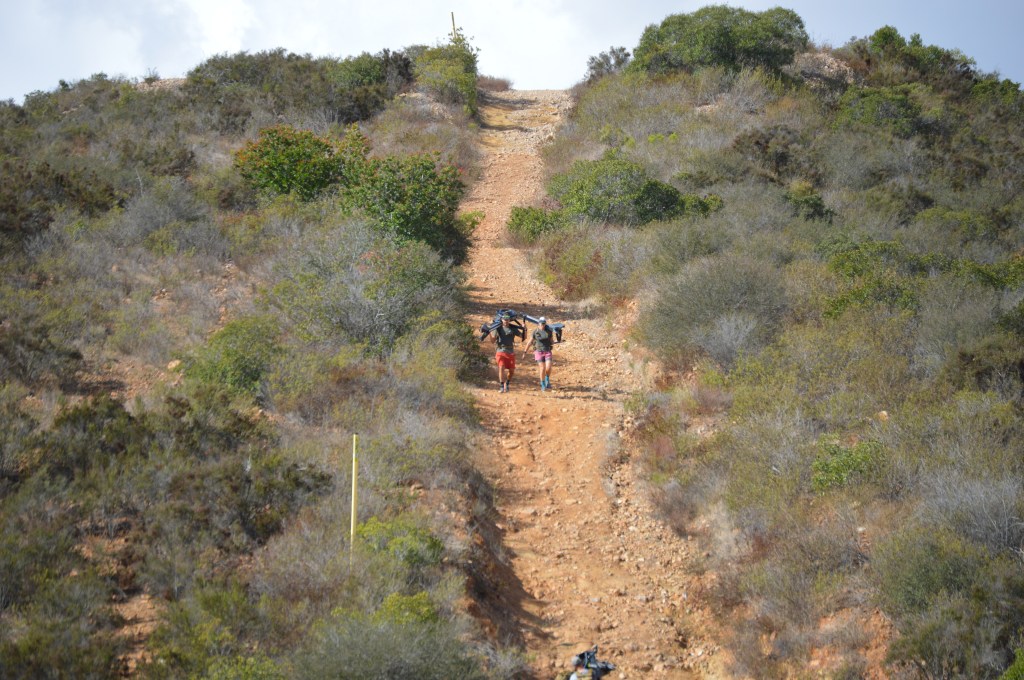

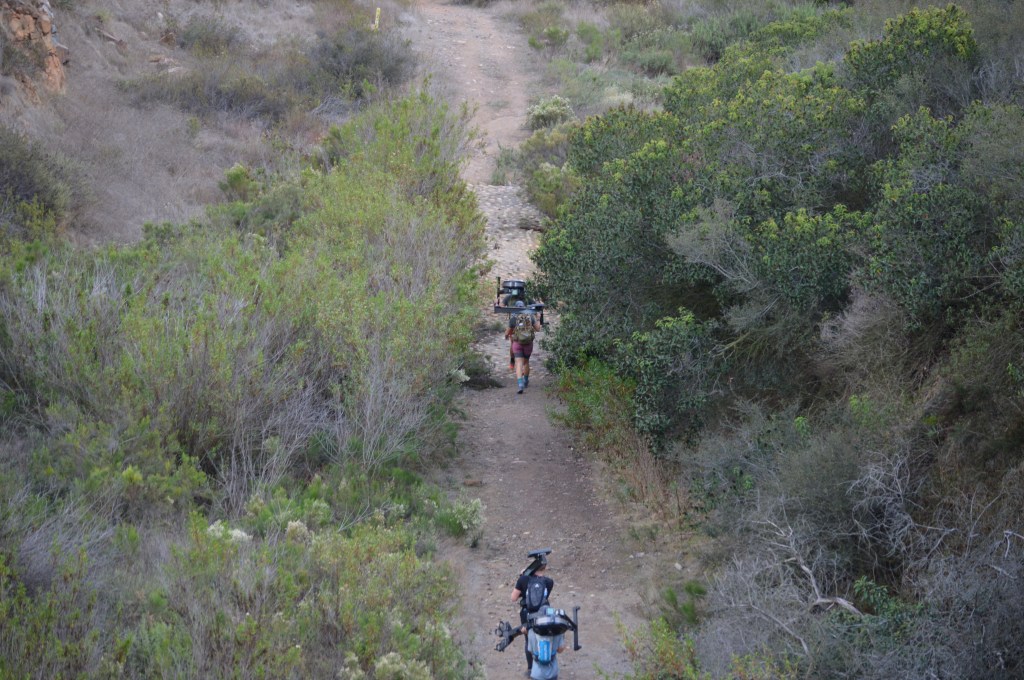
As we stepped off from Peak 2, I think both Brandon and I had the realization that Dog Tags were a reasonable goal. We were moving well and rowing consistently. So long as we kept to a consistent pace and held our row times, we could do it.
Brandon started with the flywheel for this section. We were informed of some rocky areas right off the start and that it was downhill. He is much more efficient, especially with the added weight on technical, downhill terrain. I joke that he is a Boy Scout because of his comfort on the trails. He is a big reason for my increased comfort and ability to move faster on more technical trails. I’m still a beginner, but anytime I’m with him, I am more confident as I watch him go.
We approached Team 9 on one of the downhills and worked past them. We continued to move with Team 7 next in our sights. We got to an uphill and picked them off. As I passed by John Dugan (whose pictures are incredible), I mumbled, “The overtake!” It was all in good fun, but I was locked in. Shortly after this, Brandon said he needed to switch off the flywheel. I told him we would after we got around a bend so the team behind us wouldn’t see us stop. We tried to find a spot out of their sight and swapped. I told Brandon that besides Dog Tags, I wanted to win this race between us and the two teams we had just passed.
We carried on, but at the bridge before the parking lot, Team 7 was somehow right on us. We were going to stop for a minute once we got through the checkpoint before Peak 3, but we opted to grab bottles and keep moving.
We started up the 3rd peak and Brandon took the flywheel back. He was confused and thought we had to row before the peak. We cleared that up, chugged waters, and then continued up. There were some steps that he was pushing to get up. I kept on asking if he wanted to swap and he would ask, “How much further”? We did eventually switch, but likely a touch too late. We finished up the peak with Dog Tags in mind and the goal of winning our race.
On our way up we saw the top three teams on their way down and cheered for them all. We were also surprised by the order we saw them.
Peak 3: Learn and Adapt
We got to the top. I started on the rower. Shane (Dark Horse Rowing), the UCSD Rowing Crew, the Doc (Ben), and Jen were all at Peak 3. There was a lot of water accessible thanks to the UCSD team running up and down the hill for us. They were a welcoming crew. On one of our first swaps, Brandon started cramping a minute or two into his row. I told him to hop off and let me continue. Remember when I said we should have switched earlier on the climb-up? He needed salt, water, and/or food. In my head, I was ready to row this 10k if I needed to. Once he could, he jumped back in. I think we did ~3.5 minutes on for Brandon and I kept getting it back to the five-minute intervals, so maybe rowed for 5.5-6.5 minutes.
Based on our meters when the two teams behind us arrived, I knew we had our race in the bag if we kept a steady pace. Dog Tags were looking good too, but Brandon had to row the last 2k. And we had to get down the hill.
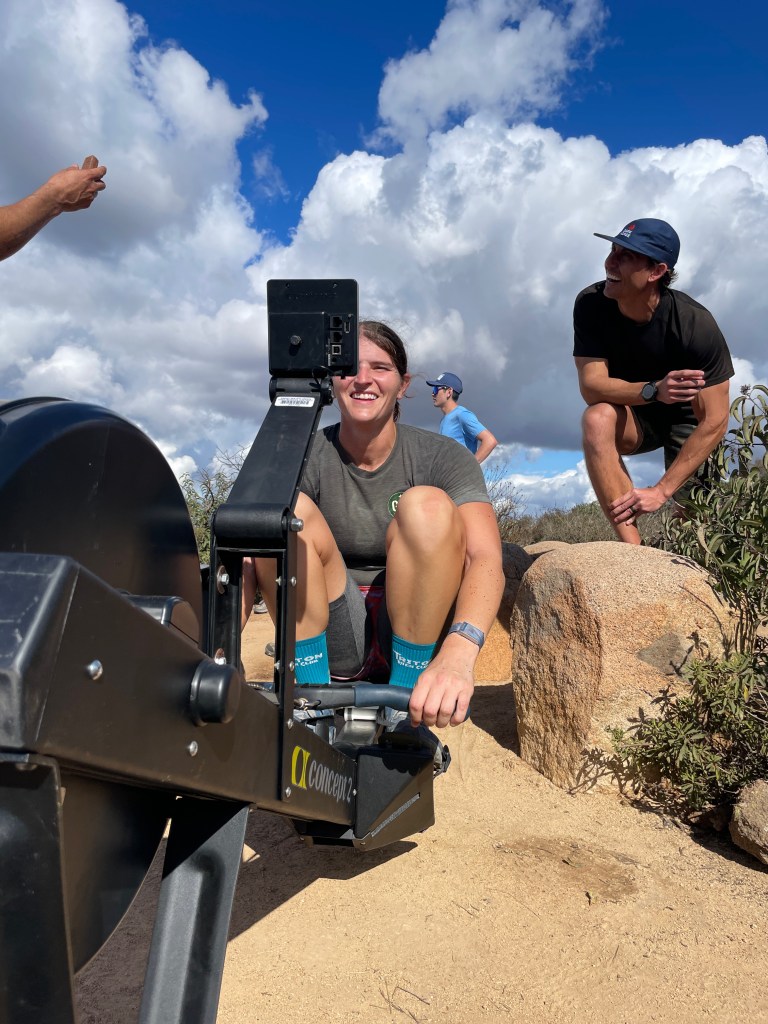
The coaching from Shane and the UCSD Crew was awesome. One cue from Shane and my pace dropped at least 10 seconds, to which he said, “Look what happens when you listen, it’s amazing”. This made me chuckle. The energy was fun even though everyone was tired.
I felt strong at the end of the row and knew I had to carry that flywheel down the hill to give Brandon the time he needed to sort out his cramping, which can
flare up on downhills. We finished our row in line with our two others around 46 minutes.
Peak 3 to Finish: Just Keep Moving
Brandon got the flywheel on my back and we were off. One of the UCSD Rowers joined us on the hike down. We had 45 minutes or so to finish the hike and row. I knew I couldn’t switch the flywheel off. If anything, I would rather stop for a minute and then continue, but that didn’t happen. We passed Clint and Jessica on their way up and got some cheers. A hiker, with headphones in, was coming up as we were going down. I tried to get his attention and eventually yelled. He was surprised to see us. PSA: make sure you can hear on trails. Whether it’s someone who can’t look up because they’re carrying a rower or an animal, you need to pay attention!
Back to the point, we made our way down. It was getting hard, but the finish was in sight.
2k Buy-out: Last Push
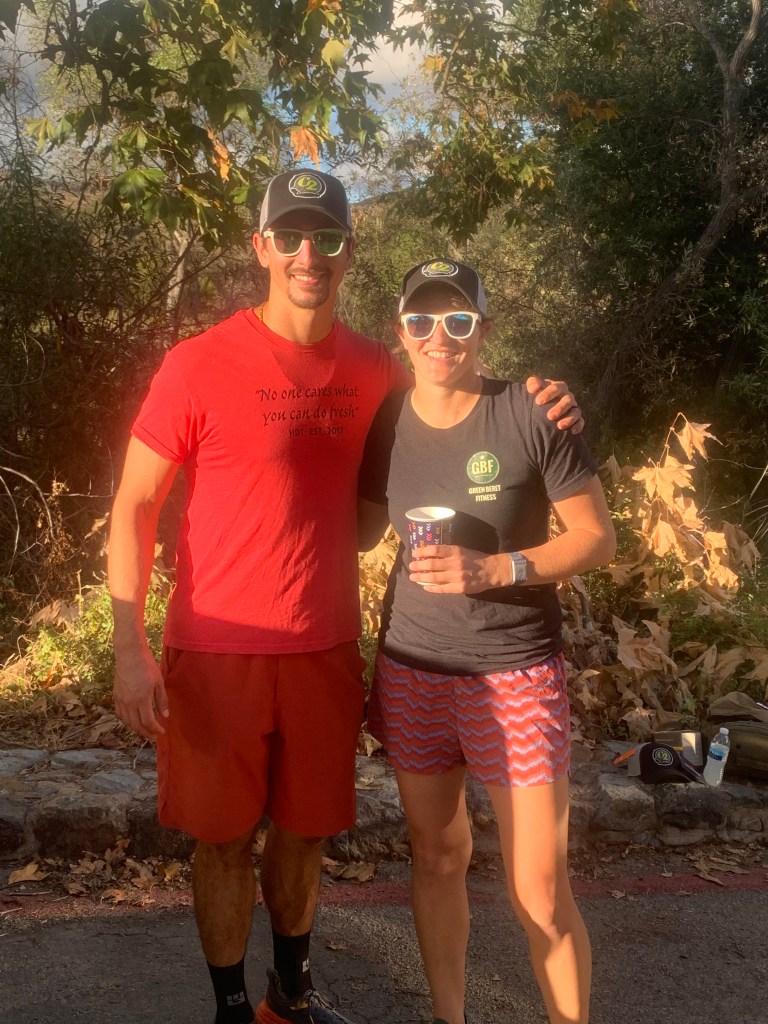
Brandon got on the rower with plenty of time to make Dog Tags – he wanted to finish strong. He used a lot of arms on the row because of the leg cramps and finished in ~9 minutes. I may have played Bon Jovi’s Livin’ on a Prayer at the 1000m mark. He crushed out the last few hundred meters with the UCSD Crew and everyone else cheering him on. We finished in 6h19m. Brandon’s first dog tags! And drank an amazing espresso crafted by Shane.
Personal Reflection
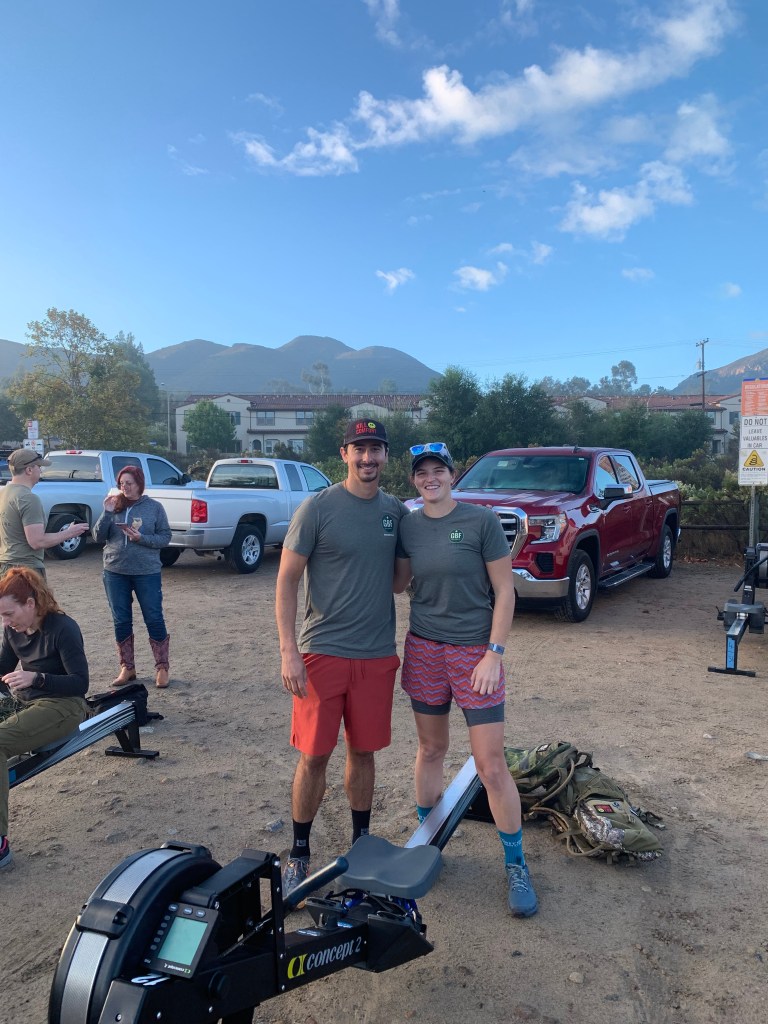
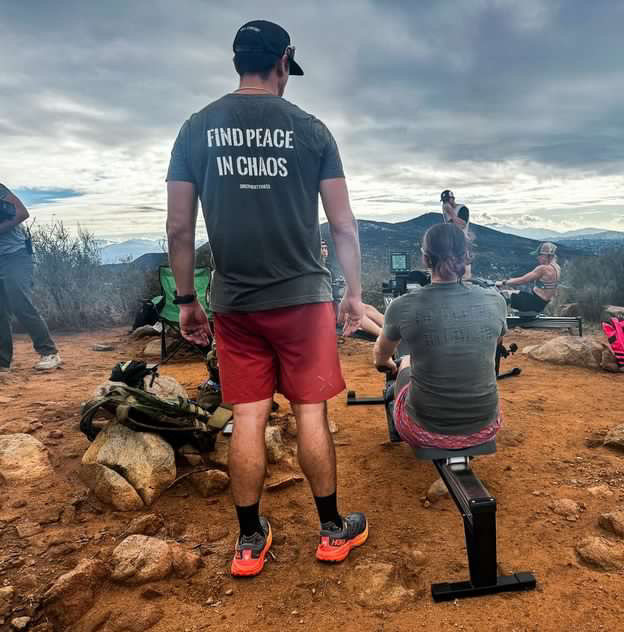




“You are not a high performer if you don’t make other people better. Full stop.” – Adam Grant
Brandon carried the flywheel more than I did. He’s a stronger Rucker than me. In the end, I rowed for more time and presumably more meters because of the 3rd peak. But this is why rowing time was our strategy – not everyone is fresh at the same time. And why hiking hard was also important.
It does not matter who rows more meters or carries the heavier equipment for longer – you have to play to your strengths as they come and go, especially in a team event. You can pick each other up when you need to.
Lessons
- Set tougher goals. You’re capable of more than you think.
- Pick the right team. You need your team when you’re down, they’ll need you when you’re down. You’ll need each other when you’re both down.
- Enjoy the moment. Sometimes you have to do uncomfortable things. When you step back and look at what you’re doing, it’s pretty incredible.
Final Thoughts
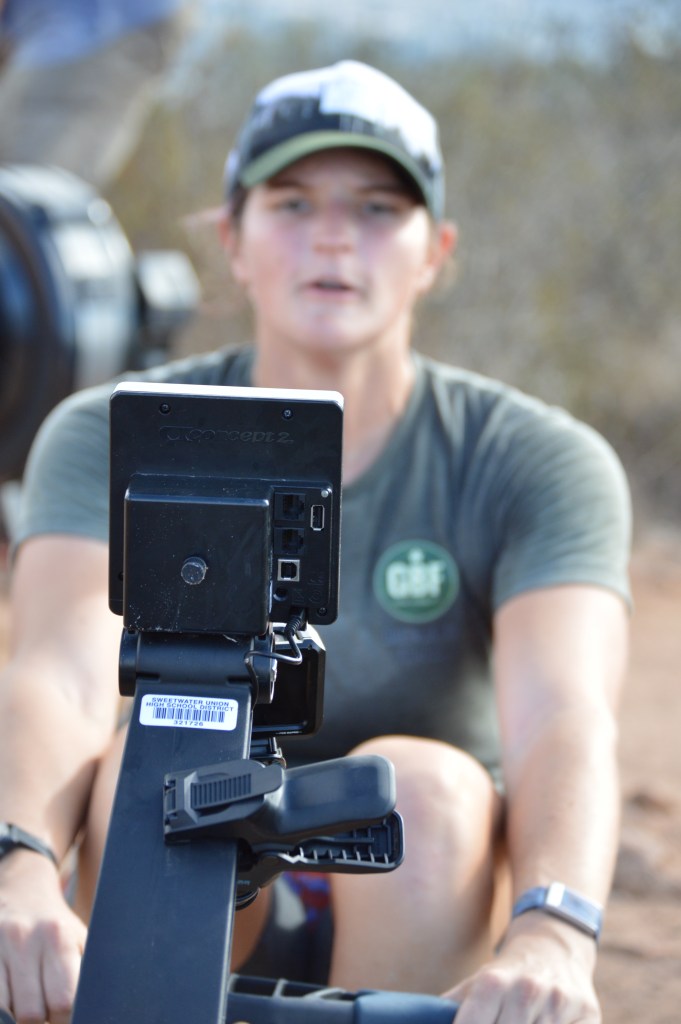
Our mindset of finishing the thing factored in throughout the day. We moved with pace but didn’t run. We could have worked harder, especially on flatter segments. We spent a little over half of our time hiking and the rest rowing. Even if we kept the same rowing pace, we could have pushed the hikes even harder – we could be faster than we performed.
This is where I feel I need to start setting higher goals for myself. I’m getting too comfortable with achieving the lower goals I set.
Huge shout out to the volunteers – you are all incredible and helped make the event as fun as it was!
Until the next. 👫🚣♀️🙂
Ready to sign up for your next challenge? Use GBF-SAM for 15% off.


 Ruck with Sam - Home
Leave a reply to Green Beret Fitness (GBF) Operation OCALA ’24 – Ruck with Sam – Home Cancel reply